Table of Contents
Modular Expansion Joint selection and procurement should follow a defined project requirement and a controlled acceptance record. A quotation can be accurate against the wrong drawing revision. The purchasing team therefore needs a controlled technical baseline before it compares delivery dates or commercial terms.
Modular Expansion Joint: role and application
A modular bridge joint distributes movement through several gaps and supporting components. Its movement-control arrangement and fatigue evidence must relate to the exact configuration proposed for the crossing.
The modular expansion joint review should connect the purchased item to a deck-joint layout including kerbs and staged splices. The engineering objective is traffic-surface continuity, controlled movement and water management. Keep the product identity and the application requirement visible throughout the order.
Modular vs finger expansion joint
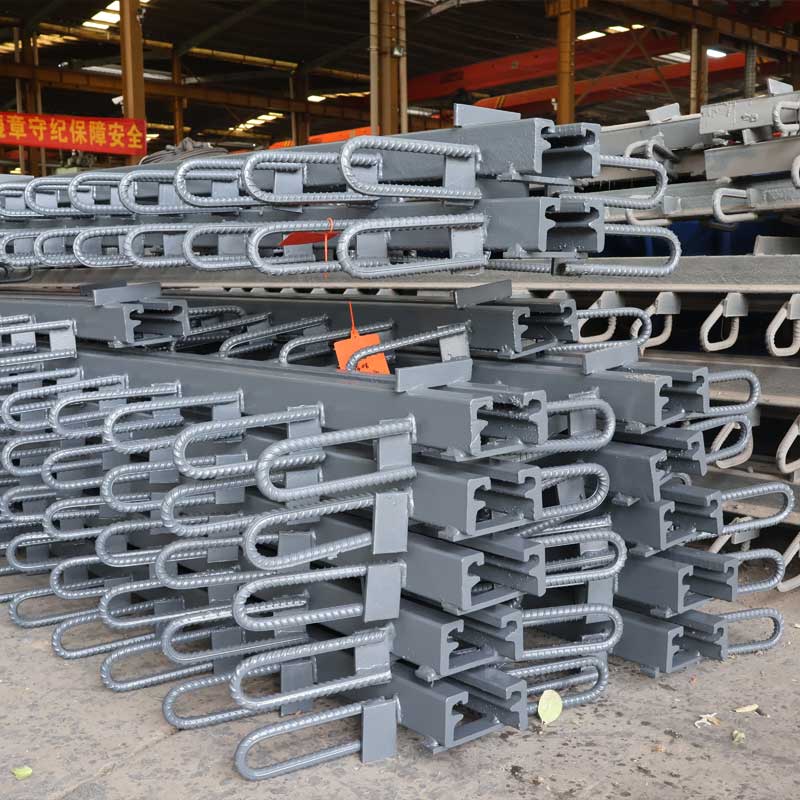
A modular system distributes movement through several gaps and supporting components. A finger arrangement uses interlocking steel plates and commonly requires a separately detailed drainage provision. Review fatigue evidence, skew, access and the consequences of debris accumulation for each proposed design. The right comparison is between complete, project-compliant offers. Do not assume that similar overall movement labels make their drainage or replacement requirements equivalent.
List every interface that affects fit or function. Mark the dimensions controlled by the designer and those proposed by the supplier. Resolve contradictions between the schedule, section and detail instead of letting the workshop select whichever value is easiest to manufacture.
For modular expansion joint, the important interface is the deck-joint detail. In this review, focus on the installation gap, level, fixings and seal transitions. Record any departure from the agreed arrangement before the next construction stage makes correction difficult.
Project inputs and interfaces
The modular expansion joint inquiry should state total movement, number of gaps, support configuration, fatigue qualification, skew, transport lengths and field splice locations. Separate confirmed project requirements from information still awaiting the responsible designer. Leave missing values as open questions instead of copying unrelated catalog ratings.
Use movement envelope and installation setting as the starting point for the modular expansion joint specification. Then identify the receiving interface, construction stage and inspection access. Assign a responsible person to resolve each missing input before the production release.
Compare the available approaches
| Approach | Useful for | Decision limit |
|---|---|---|
| Unmarked catalog drawing | Fast preliminary discussion | Insufficient for a project release |
| Project-specific approved drawing | Controlled manufacture and inspection | Requires resolved interfaces |
| single-gap strip-seal joint | Application-specific alternative | A modular system has additional components and maintenance interfaces. A single-gap option is only viable when its demonstrated movement range and project conditions are adequate. |
For modular expansion joint, compare options against the same deck-joint detail. A modular system has additional components and maintenance interfaces. A single-gap option is only viable when its demonstrated movement range and project conditions are adequate.
Inspection evidence and acceptance
Request a marked drawing showing the revision, units, material designation, tolerances and installation orientation. A signed approval should identify any remaining exclusions. Keep the original query beside the final answer so that a later revision does not silently reopen a settled issue.
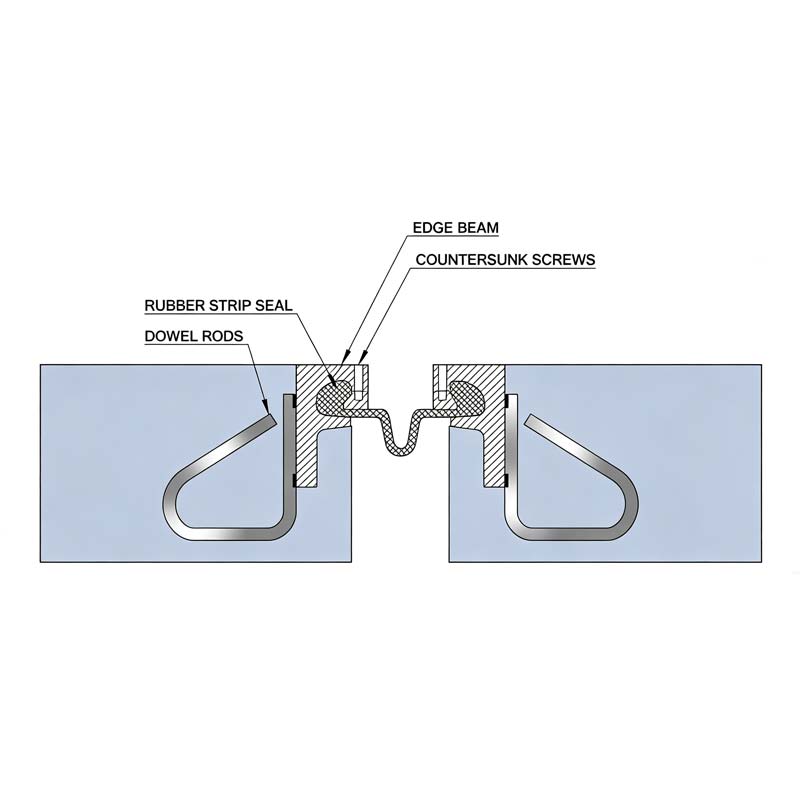
One failure mode to investigate is that uneven gap distribution or debris can create localized movement and loading conditions that differ from the intended arrangement. For the modular expansion joint acceptance record, inspect the movement-control components, access for maintenance and the relationship between shop modules and staged deck pours. A generic report or an unlocated photograph cannot resolve a missing project-specific observation.
Site coordination and acceptance
Use an interface review with the designer, site team and supplier. Check the least accessible feature first, then confirm the part can be installed and inspected in the planned construction sequence. Freeze the approved revision before production starts.
Before releasing modular expansion joint work, reconcile the physical item with its identification and approved drawing. Pay particular attention to the installation gap, level, fixings and seal transitions. If an unplanned change affects sealing, load transfer, geometry or movement, obtain the relevant technical disposition before proceeding.
Records for maintenance and handover
Keep the modular expansion joint record linked to its installed location. Retain the accepted drawing, batch identity, inspection results and any approved deviations. Include enough context to distinguish the original condition from later changes, without presenting a visual inspection as a complete performance test.
For independent background, consult the FHWA bridge expansion-joint construction review. Use it for background terminology and context alongside the approved project documents.
Prepare your project inquiry
To discuss modular expansion joint requirements with Hebei Kunshuo Rubber & Plastic, send your drawing, quantities, movement envelope and installation setting, delivery destination and required inspection records. Start with the Steel Bridge Expansion Joints information and use the inquiry form below to identify the exact application.
Ask the team to confirm the proposed modular expansion joint configuration, available material options and any exceptions in writing. Where a special grade or qualified system is required, confirm availability and supporting evidence before treating a general product page as an offer. You can also contact Kunshuo with the current drawing revision.
Frequently asked questions
What information is needed to specify modular expansion joint?
Provide total movement, number of gaps, support configuration, fatigue qualification, skew, transport lengths and field splice locations. Identify the intended application and the drawing revision so that the proposed item can be checked against the actual interface.
Which drawing should the supplier manufacture to?
The purchase order should name one approved drawing and revision. If an attachment conflicts with it, resolve the conflict in writing before release.
What should be checked before accepting modular expansion joint?
For this application, inspect the movement-control components, access for maintenance and the relationship between shop modules and staged deck pours. Record the location and resolve missing evidence before the item is concealed or put into service.
Can modular expansion joint be replaced by another product?
A modular system has additional components and maintenance interfaces. A single-gap option is only viable when its demonstrated movement range and project conditions are adequate.
How can I request a modular expansion joint quotation?
Send the drawing, quantity, project conditions, delivery destination and required inspection scope. Ask for a written response identifying the proposed configuration and any technical exceptions.